
- This topic is empty.
-
AuthorPosts
-
2026-06-12 at 18:39 #123559
Artificial intelligence is reshaping the way people interact with digital devices, and touch screen technology is evolving to keep pace. What was once simply an input and display interface is now becoming an intelligent interaction platform capable of delivering faster, smarter, and more personalized user experiences.
As AI technologies continue to advance, the combination of intelligent software and touch displays is creating new possibilities across industries such as retail, healthcare, manufacturing, education, transportation, and smart cities.
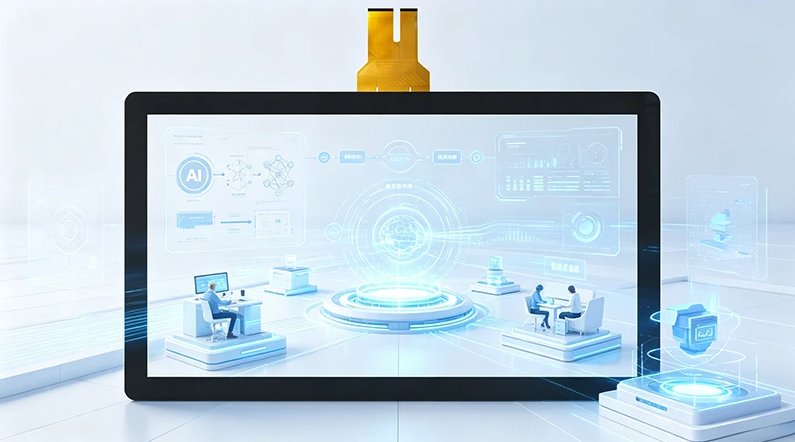
AI Is Making Touch Interfaces More Intelligent
Traditional touch screens respond only when users perform specific actions like tapping or swiping. By integrating AI, touch-enabled devices can better understand user behavior, learn from previous interactions, and provide more relevant responses.
For example, an intelligent touch interface can recommend frequently used functions, predict user preferences, or simplify navigation based on usage history. This creates a smoother and more efficient interaction experience while reducing unnecessary steps.
Expanding Applications Across Industries
The integration of AI and touch screens is driving innovation in many sectors.
Retail businesses are adopting smart self-service kiosks that provide personalized shopping recommendations and faster checkout experiences. In healthcare, interactive touch displays help medical professionals access patient records, monitor equipment, and improve workflow efficiency.
Educational institutions are using AI-powered interactive displays to create engaging classroom experiences that adapt to different learning styles. In manufacturing, intelligent control panels allow operators to monitor equipment in real time while receiving predictive maintenance alerts generated by AI algorithms.
These applications demonstrate how intelligent touch interfaces are improving both productivity and user satisfaction.
Creating More Natural Human-Machine Interaction
One of the greatest advantages of combining AI with touch technology is the ability to create more intuitive interactions.
Instead of relying solely on touch input, modern systems can integrate voice recognition, facial recognition, gesture control, and handwriting recognition. Users can choose the interaction method that best fits their environment and needs.
AI can also personalize interface layouts by placing commonly used features in more accessible locations, making devices easier to operate for both experienced and first-time users.
Improving Operational Efficiency
AI-powered touch systems not only enhance user experience but also improve operational performance.
By analyzing real-time data, intelligent systems can identify abnormal operating conditions, predict equipment failures, and recommend maintenance before unexpected downtime occurs. This proactive approach helps businesses reduce maintenance costs while increasing equipment reliability.
For organizations operating self-service terminals, industrial control systems, or digital signage, AI-driven analytics also provide valuable insights into user behavior and system performance.
Challenges in AI and Touch Screen Integration
While the benefits are significant, integrating AI with touch screen technology also presents several challenges.
Data privacy and cybersecurity remain major concerns, particularly when AI systems process personal information or behavioral data. Developers must ensure that intelligent features comply with relevant security standards while protecting user privacy.
Hardware compatibility is another important factor. AI applications often require greater computing power and optimized software to maintain fast, responsive performance without affecting the overall user experience.
Future Trends in Intelligent Touch Technology
As AI continues to develop, touch screen technology will become even more adaptive and context-aware.
Future devices may automatically recognize individual users, customize interfaces in real time, and combine touch input with voice, vision, and environmental sensors to create seamless interactions. Improvements in edge AI and high-performance processors will further reduce response times while enabling more intelligent decision-making directly on the device.
These advancements will expand the role of touch screens from simple control panels to intelligent platforms that support complex digital ecosystems.
Conclusion
The integration of AI and touch screen technology is transforming the way people interact with digital systems. By combining advanced touch capabilities with intelligent software, organizations can improve efficiency, enhance user experiences, and support smarter decision-making across a wide range of applications.
As digital transformation accelerates, AI-enabled touch interfaces are expected to play an increasingly important role in commercial, industrial, and public environments, providing more responsive, personalized, and efficient human-machine interaction.
https://www.greentouch.com.cn/
ShenZhen GreenTouch Technology Co.,Ltd. -
AuthorPosts

- You must be logged in to reply to this topic.