
- This topic is empty.
-
AuthorPosts
-
2026-05-18 at 16:41 #123251
In industrial fastening applications, seemingly simple components often carry disproportionate responsibility. The One-piece cable ties used to secure wiring harnesses, bundles, and components are a clear example. While their structure appears straightforward, their performance directly impacts installation efficiency, long-term reliability, and compliance with safety and environmental standards.
As production environments shift toward higher automation, tighter quality control, and global standardization, the requirements for cable ties have evolved significantly. It is no longer sufficient for a cable tie to simply “hold” a bundle. It must deliver consistent tensile strength, predictable locking performance, resistance to environmental stress, and compatibility with automated installation systems.
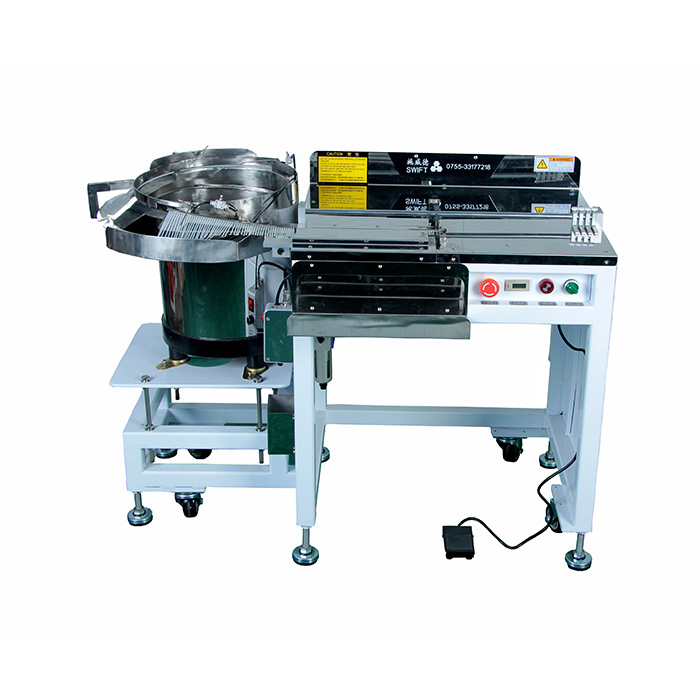
Swift Automation Technology, as a global manufacturer specializing in both automatic cable tying systems and nylon cable ties, addresses these requirements by integrating material engineering, precision molding, and automation-oriented design into its One-piece cable ties portfolio.
Why one-piece structure matters in industrial environments
Traditional cable fastening solutions sometimes rely on multi-component assemblies or secondary locking mechanisms. In contrast, One-piece cable ties integrate the strap and locking head into a single molded structure.
This design offers several technical advantages:
-
Eliminates assembly defects caused by separate components
-
Ensures uniform material properties across the entire tie
-
Reduces failure points under tension or vibration
-
Enables high-speed automated feeding and installation
In automated production lines, even minor inconsistencies in component geometry or material behavior can lead to misfeeds, jamming, or incomplete fastening. The one-piece structure ensures repeatability, which is critical for automation reliability.
Material selection: Nylon 6/6 and beyond
Material performance is the foundation of cable tie reliability. Most industrial-grade One-piece cable ties are manufactured using Nylon 6/6 (PA66), selected for its balance of strength, flexibility, and environmental resistance.
Typical material properties include:
-
Tensile strength: 50–80 MPa depending on formulation
-
Continuous operating temperature: -40°C to 85°C (standard grades)
-
Melting point: approximately 255°C
-
Good resistance to oils, greases, and common industrial chemicals
However, standard PA66 is not sufficient for all applications. Advanced formulations are often required:
-
UV-stabilized grades for outdoor applications with 3–5 years weather resistance
-
Heat-stabilized variants for environments exceeding 105°C
-
Flame-retardant materials compliant with UL94 V-2 or V-0
-
Low-smoke, halogen-free options for sensitive environments such as rail or data centers
Swift Automation Technology integrates material customization into its production process, ensuring that cable ties are tailored to specific environmental and regulatory requirements.
Mechanical performance: tensile strength and locking reliability
The primary function of a cable tie is to maintain bundle integrity under load. This requires both high tensile strength and reliable locking performance.
Typical performance parameters for industrial One-piece cable ties include:
-
Minimum loop tensile strength ranging from 8 kg (small sizes) to over 120 kg (heavy-duty variants)
-
Locking head efficiency ensuring minimal slippage under sustained load
-
Controlled elongation to absorb shock without breaking
The locking mechanism is particularly critical. It must:
-
Engage consistently during installation
-
Resist back-out under vibration
-
Maintain holding force over time without creep
Precision injection molding ensures that the pawl and tooth geometry are consistent across production batches, which is essential for predictable locking behavior.
Dimensional precision and tolerance control
In automated applications, dimensional accuracy is not optional—it is mandatory.
Key parameters include:
-
Strap width tolerance within ±0.05 mm
-
Tooth pitch consistency to ensure smooth engagement
-
Head geometry precision for reliable tool interaction
Variations in these parameters can lead to:
-
Feeding issues in automatic cable tie guns
-
Inconsistent tightening force
-
Increased rejection rates in high-speed production lines
Swift Automation Technology employs high-precision molds and automated inspection systems to maintain strict dimensional control, ensuring compatibility with both manual and automated installation tools.
Automation compatibility: a critical differentiator
As industries move toward higher levels of automation, cable ties must be designed for seamless integration with automatic tying systems.
Key design features for automation compatibility include:
-
Consistent stiffness for reliable feeding
-
Smooth surface finish to reduce friction in guiding channels
-
Optimized head design for tool engagement
-
Controlled flexibility to prevent bending or misalignment
Swift Automation Technology’s dual focus on cable ties and automatic tying equipment provides a unique advantage. The ties are engineered in parallel with the tools, ensuring optimal performance in automated environments.
This system-level approach reduces:
-
Installation cycle time
-
Tool wear and maintenance
-
Risk of installation errors
Environmental resistance and long-term durability
Cable ties are often exposed to challenging environmental conditions, including temperature fluctuations, UV radiation, humidity, and chemical exposure.
Key durability considerations include:
-
Resistance to UV degradation in outdoor applications
-
Stability under thermal cycling
-
Moisture absorption behavior affecting mechanical properties
-
Chemical resistance in industrial environments
For example, in outdoor installations, UV exposure can cause standard nylon to become brittle over time. UV-stabilized formulations extend service life significantly, maintaining flexibility and strength over multiple years.
Application scenarios: performance in real-world conditions
The value of high-quality One-piece cable ties becomes evident in demanding applications.
In automotive wiring harness assembly:
-
High vibration environments require secure locking
-
Temperature variations demand material stability
-
Automated installation requires consistent dimensions
In electrical infrastructure:
-
Flame-retardant properties are critical for safety compliance
-
Long-term reliability is essential for maintenance reduction
-
UV resistance is necessary for outdoor installations
In data centers and telecommunications:
-
Clean installation with minimal debris generation
-
Consistent bundling for airflow management
-
Compliance with low-smoke and halogen-free standards
In industrial manufacturing:
-
High-speed assembly lines require automation compatibility
-
Resistance to oils and chemicals is essential
-
Durability under continuous operation is critical
Comparison with alternative fastening solutions
Cable ties compete with several alternative fastening methods, including metal clamps, Velcro straps, and reusable ties.
Metal clamps:
-
High strength but limited flexibility
-
Higher cost and installation complexity
Velcro straps:
-
Reusable but lower tensile strength
-
Not suitable for permanent fastening
Reusable plastic ties:
-
Flexible but less secure under vibration
-
Higher cost per unit
One-piece cable ties:
-
High strength-to-cost ratio
-
Fast installation
-
Suitable for both manual and automated processes
-
Wide range of material options
This combination makes them the preferred solution for high-volume industrial applications.
Cost efficiency and lifecycle considerations
While cable ties are low-cost components individually, their impact on overall production efficiency is significant.
Factors influencing cost efficiency include:
-
Installation speed
-
Failure rate and rework
-
Tool compatibility
-
Long-term durability
High-quality One-piece cable ties reduce total cost by:
-
Minimizing installation errors
-
Reducing maintenance and replacement
-
Ensuring consistent performance across large volumes
Manufacturing capability as a quality benchmark
The performance of cable ties is directly linked to manufacturing capability.
Swift Automation Technology’s strengths include:
-
Advanced injection molding technology for precision production
-
Integrated R&D for both cable ties and automatic tools
-
Automated quality inspection systems
-
Global supply capability with consistent product standards
This integrated approach ensures that each cable tie meets strict industrial requirements and performs reliably across different applications.
Future trends: smarter fastening systems
The evolution of cable fastening systems is moving toward greater integration with automation and digital manufacturing.
Emerging trends include:
-
Smart installation tools with torque and tension monitoring
-
Data integration for quality tracking
-
Advanced materials with enhanced environmental resistance
-
Custom-designed ties for specific automated systems
As automation becomes more prevalent, the role of cable ties will expand from simple fastening components to integral elements of intelligent assembly systems.
Conclusion: precision engineering in a simple form
One-piece cable ties may appear simple, but their design, material composition, and manufacturing precision determine their performance in demanding industrial environments.
From tensile strength and locking reliability to automation compatibility and environmental resistance, every detail contributes to overall system efficiency.
With its expertise in both cable ties and automated installation systems, Swift Automation Technology provides solutions that align with the evolving needs of modern manufacturing.
In high-performance production environments, even the smallest components must meet the highest standards—and One-piece cable ties are no exception.
http://www.sz-swift.com
Shenzhen Swift Automation Technology Co., Ltd. -
-
AuthorPosts

- You must be logged in to reply to this topic.