
- This topic is empty.
-
AuthorPosts
-
2026-09-21 at 14:34 #124781
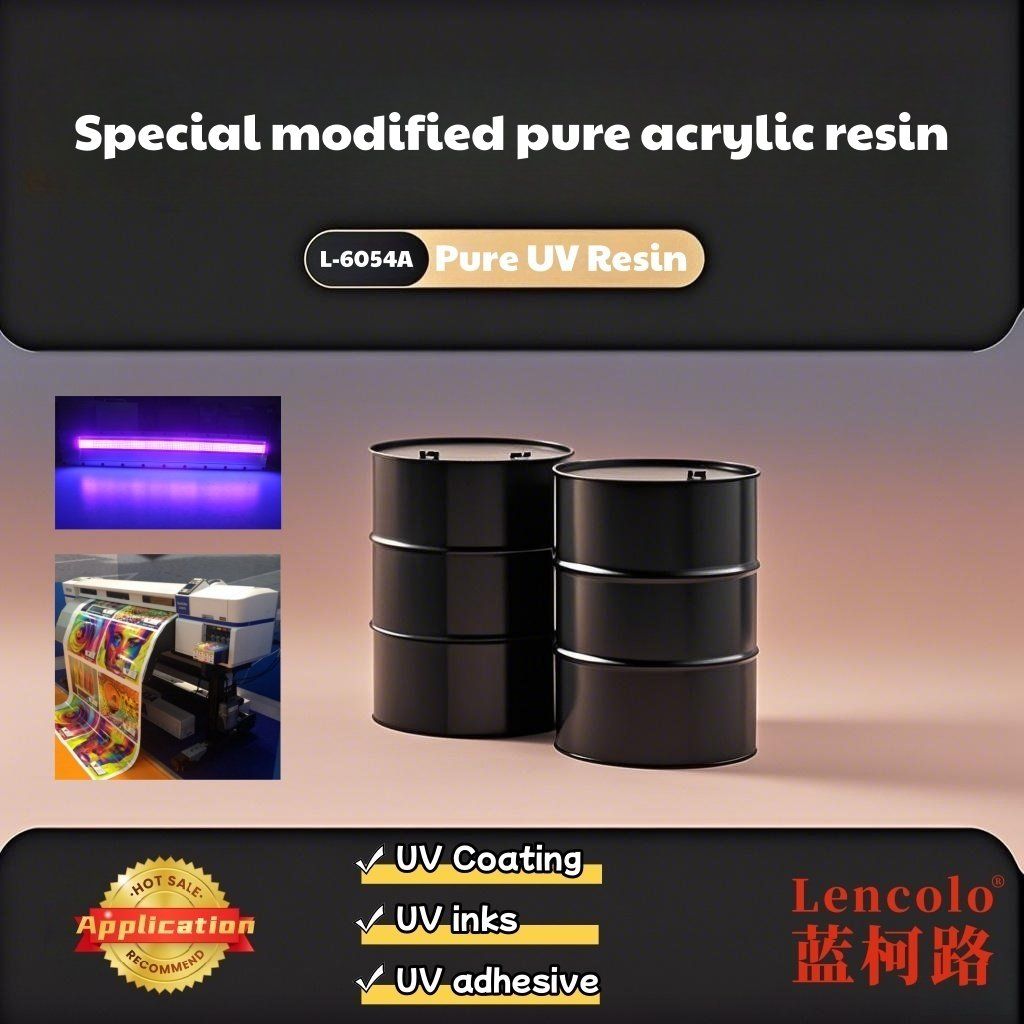
Q: My UV inkjet ink has high viscosity and unstable jetting. Should I start by changing the UV resin?
A: In many cases, yes. UV resin is one of the main film-forming components in a UV inkjet formulation, so its viscosity can have a significant effect on the final ink. A high-viscosity resin may require more reactive diluent to reach the target viscosity, which can then change curing, shrinkage, flexibility, hardness, or adhesion.
For this reason, starting with a low-viscosity UV resin can be more effective than trying to correct everything through dilution. But resin viscosity should not be considered by itself. The printhead, operating temperature, monomers, pigments, photoinitiators, additives, and substrate all affect the final ink.
Q: What low-viscosity UV resins can be considered for inkjet applications?
A: There are several possible starting points depending on the required resin chemistry and film properties.
L-6111 is a low-viscosity epoxy acrylate with a reported viscosity of 250–800 CPS. It is indicated for inks, inkjet, and coatings for wood, paper, plastic, and metal, as well as OPV/PVD and 3D printing.
L-6211 is a two-functional polyurethane acrylate with a reported viscosity of 120–280 CPS. Besides its low viscosity, it is positioned for fast curing, flexibility, tear resistance, and good pigment wettability. L-6211D has the same reported viscosity range and provides a non-organotin alternative.
For formulations requiring a much lower starting viscosity, L-6212 is reported at 25–50 CPS, with good leveling, high flexibility, toughness, and excellent pigment wetting. For LED-curable systems, L-6241 is reported at 20–50 CPS, with low odor, fast LED curing, low shrinkage, toughness, and good film formation.
Q: Does choosing the resin with the lowest CPS automatically give better inkjet performance?
A: No. This is a common mistake in UV inkjet formulation.
A resin with very low viscosity may help achieve the required processing viscosity, but the finished ink still needs stable pigment dispersion, suitable curing, adhesion, flexibility, and film strength. Monomer selection also matters because reactive diluents change not only viscosity but also reactivity, functionality, shrinkage, hardness, and flexibility.
The pigment system is another major factor. High pigment loading or poor pigment-resin compatibility can increase viscosity and cause sedimentation or unstable jetting even when the base resin itself has low viscosity.
Q: Why can an ink have the right viscosity but still jet poorly?
A: Because viscosity is only one part of inkjet rheology and formulation behavior. The ink must remain stable at the actual operating temperature and form consistent droplets through the specific printhead.
If the formulation has poor pigment dispersion, excessive surface tension, unsuitable additives, or insufficient storage stability, the printer may still experience nozzle instability, misfiring, or inconsistent print quality.
Curing also needs attention. The photoinitiator system should match the UV or LED curing source. Pigments and fillers can affect UV penetration, so a formulation that jets well may still have incomplete surface or through-cure.
Q: How should I compare different low-viscosity resins before choosing one?
A: Test them under the same formulation and application conditions rather than comparing resin viscosity alone.
A practical screening program should include:
-
Viscosity at the actual printing temperature
-
Jetting and droplet formation
-
Nozzle stability and clogging tendency
-
Pigment dispersion and storage stability
-
UV or LED curing performance
-
Print uniformity and surface appearance
-
Adhesion, flexibility, hardness, and chemical resistance
The actual printhead and curing equipment should be included in the evaluation. A viscosity value listed on a TDS is a useful reference, but it does not guarantee the same viscosity or jetting behavior in the finished ink.
Q: What is the practical approach to reducing UV inkjet ink viscosity?
A: Start by defining the target viscosity and printhead requirements, then screen low-viscosity UV resins according to the required curing method, pigment system, substrate, and film properties. L-6111, L-6211, L-6211D, L-6212, and L-6241 can serve as different starting points for formulation trials.
The key is not simply to achieve the lowest possible viscosity. The objective is to achieve stable jetting and the required cured-film performance at the same time. Final resin selection should therefore be confirmed through application testing with the complete UV inkjet formulation.
https://www.lencolo37.com/
Guangdong Lencolo New Material Co., Ltd. -
-
AuthorPosts

- You must be logged in to reply to this topic.