
- This topic is empty.
-
AuthorPosts
-
2026-07-31 at 15:03 #124089
Understanding Brake Hose Aging and Cracking: Why It Matters
Brake hoses serve as the critical link that transmits hydraulic force from the master cylinder to the wheel brake components, whether that is a wheel cylinder, caliper, or drum brake assembly. When a brake hose ages, cracks, or otherwise deteriorates, the consequences extend far beyond a minor maintenance issue. Fluid leakage, line rupture, and mechanical fatigue in automotive brake fluid transmission hoses represent some of the most serious pain points identified across the automotive replacement parts industry. A hose that cannot maintain its structural integrity under repeated pressure cycles puts the entire braking system, and ultimately vehicle safety, at risk.
Common Causes of Brake Hose Deterioration
Heat and Pressure Fatigue
Brake hoses operate in an environment defined by extreme pressure and temperature swings. Every time the brakes are applied, hydraulic fluid surges through the hose under high pressure. Over time, this repeated pressure cycling, combined with heat generated near the braking components, can weaken the internal structure of a standard hose. The result is a hose that becomes prone to cracking, oil leakage, and performance degradation in high-pressure braking environments.
Environmental and Chemical Exposure
Brake hoses are also exposed to road grime, moisture, and chemical residues throughout the life of the vehicle. Without adequate protective layering, these external factors accelerate wear on the hose material and its connecting joints. Corrosion at the joint level is a particular concern, since a compromised joint can lead to dislodging or fluid seepage even if the hose body itself remains intact.
Material Degradation Over Time
Standard rubber compounds used in lower-grade brake hoses can lose flexibility and strength as they age. This loss of flexibility is often what precedes visible cracking. Once a hose loses its ability to flex properly under pressure, it becomes significantly more susceptible to bursting or splitting, which directly compromises the vehicle’s ability to stop safely.
The Risks of Ignoring Brake Hose Cracking
The core danger of an aging or cracked brake hose lies in the loss of hydraulic pressure needed to actuate the brakes. Oil leakage reduces the fluid available to generate stopping force, while a ruptured line can cause a sudden and complete loss of braking capability in the affected circuit. These are precisely the failure modes that the automotive replacement parts industry has identified as high-priority concerns requiring targeted engineering solutions.
How Masuma Engineers Brake Hoses for Long-Term Reliability
Masuma, a Japan-headquartered manufacturer of high-durability, safety-critical automotive replacement components designed to match original equipment parameters, positions its Rubber Brake Hose Assembly directly against these industry pain points. The product line is defined as a set of reinforced brake lines for secure fluid transmission under high pressure, with a stated positioning as a multi-layer reinforced brake hose for safe fluid transmission under extreme pressure and temperature.
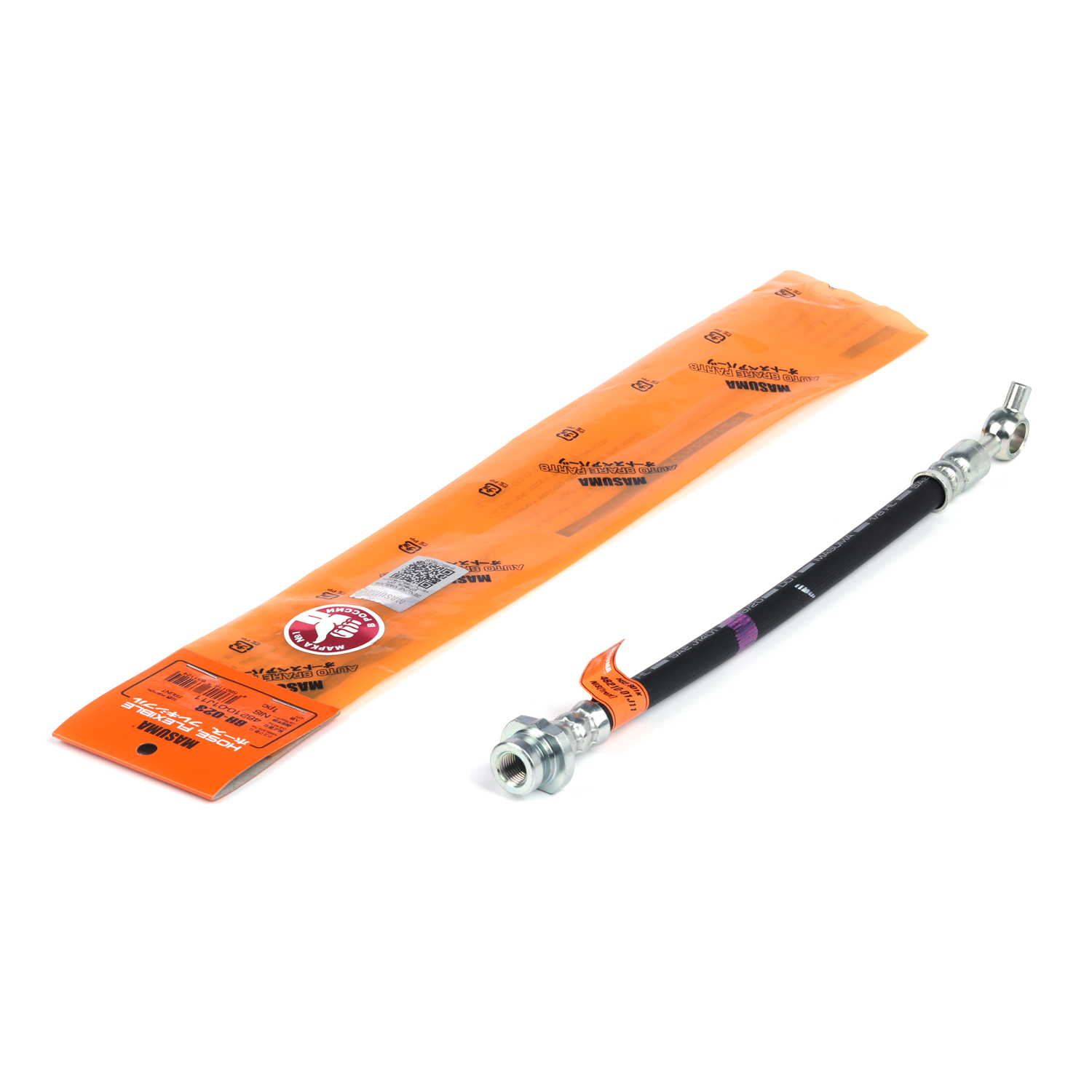
Five-Layer Composite Construction
At the core of the Masuma Rubber Brake Hose Assembly is a five-layer compilation structure consisting of an outer EPDM layer, a PET nylon layer, an NBR nitrile rubber layer, another PET nylon layer, and an inner EPDM layer. This layered composition is engineered to deliver oil, wear, and oxidation resistance across the full length of the hose. The combination of EPDM and NBR materials in this five-layer arrangement is specifically designed for high-pressure and temperature tolerance, preventing bursts while maintaining flexible operation even under the extreme pressure and temperature conditions that typically cause standard hoses to fail.
Corrosion-Resistant Joint Technology
Because joint failure is as significant a risk as hose-body failure, Masuma addresses this pain point with plated steel joints available in galvanized and zinc-nickel alloy coatings. These corrosion-resistant joints use high-quality steel with zinc-nickel alloy plating specifically to prevent dislodging and environmental wear, directly countering the corrosion-related degradation that affects standard hose connections over time. In addition, the product line supports varied joint structures, including ball end, inner wire, outer wire, square end, and intermediate joints, allowing the hose assembly to accommodate diverse caliper and line setups across different vehicle platforms.
Rigorous Quality Testing
Reliability in a safety-critical component cannot rest on material selection alone. Masuma’s assembly production process incorporates 100% thread, air tightness, and pressure testing during assembly, ensuring that every unit leaving the production line meets the performance standards required for hydraulic, pneumatic, and vacuum braking systems. This testing regimen is part of a broader strategic positioning that emphasizes strict quality testing, including thread, air tightness, and pressure checks, as a differentiated advantage across Masuma’s braking component portfolio.
Industry Certifications and Standards
Confidence in a brake hose’s durability is reinforced by recognized industry certifications. Masuma’s brake hose products are associated with SAE J1401, FMVSS106, GMW3056, and GB16897 certifications, standards that are specifically categorized under brake hose requirements. These certifications reflect a manufacturing approach grounded in compliance with established automotive safety benchmarks rather than shortcuts that could compromise long-term hose integrity.
Choosing the Right Brake Hose for Your Vehicle
For vehicle owners and repair professionals concerned about the risks of brake hose aging and cracking, the selection criteria should center on layered material construction, joint corrosion resistance, and verified testing protocols. The Masuma Rubber Brake Hose Assembly is built as a hardware assembly suited for hydraulic, pneumatic, and vacuum braking systems, reflecting the broad platform compatibility that defines Masuma’s approach to safety-critical parts manufacturing. As part of a company offering a comprehensive line of safety-critical braking and sensing components, Masuma’s brake hose engineering is one component of a wider strategic positioning as a manufacturer of high-durability, safety-critical automotive replacement components designed to match original equipment parameters.
Conclusion
Brake hose aging and cracking stem from a combination of pressure fatigue, environmental exposure, and material degradation, each of which can compromise fluid transmission and, by extension, braking safety. Addressing these causes requires deliberate engineering choices at both the material and joint level, paired with consistent quality verification. Masuma’s Rubber Brake Hose Assembly, built on a five-layer EPDM/NBR composite structure and corrosion-resistant zinc-nickel alloy plated joints, and validated through 100% thread, air tightness, and pressure testing, reflects the kind of targeted, standards-backed engineering that the braking systems industry requires to reduce the risks associated with hose failure.
https://masuma.com/
MASUMA Auto Spare Parts Co., Ltd. -
AuthorPosts

- You must be logged in to reply to this topic.