
- This topic is empty.
-
AuthorPosts
-
2026-07-10 at 14:51 #123821
When it comes to electrical panel construction and high-voltage equipment insulation, material selection directly impacts both operational safety and long-term system reliability. Among the diverse range of insulating materials available, bakelite sheet has emerged as a proven solution for boosting electrical panel system safety. This in-depth review examines the performance characteristics, application benefits, and market validation of bakelite-based laminates in electrical safety systems.
Understanding Bakelite: The Original Industrial Insulator
Bakelite represents the category of phenolic laminate materials, which are manufactured by impregnating cellulose paper or cotton cloth with phenolic resin and processing the composite under high temperature and pressure. The resulting thermoset laminate delivers a unique combination of electrical insulation, mechanical rigidity, and thermal resistance that has made it an industry standard for over a century.
For electrical panel applications specifically, two primary bakelite variants dominate the market: phenolic paper laminates and phenolic cotton cloth laminates. Each offers distinct performance advantages depending on the voltage class, environmental conditions, and mechanical stress requirements of the application.
Critical Safety Properties for Electrical Panels
The fundamental role of insulating materials in electrical panels is to prevent electrical arcing, short circuits, and current leakage while maintaining structural integrity under operational stress. Bakelite sheets address these safety requirements through several key properties:
Dielectric Strength and Arc Resistance
Bakelite laminates provide reliable electrical insulation with high breakdown voltage capacity, effectively preventing arcing across panel gaps. The phenolic resin matrix creates a non-conductive barrier that maintains stable dielectric properties even in low-voltage applications. This characteristic is essential for switchgear panels, terminal blocks, and busbar supports where inadvertent contact between live conductors could result in catastrophic failure.
Thermal Class E Performance
With continuous service temperature ratings up to 120°C, bakelite sheets maintain both mechanical and electrical integrity under the thermal loads generated by electrical equipment operation. This heat resistance ensures that the material does not deform or lose its insulating properties during normal operating conditions, preventing potential safety hazards associated with material degradation.
Mechanical Rigidity and Structural Support
Beyond insulation, electrical panels require mounting surfaces and structural components that can withstand screw torque, compressive loads, and vibration without warping. The high compressive strength and surface hardness of bakelite laminates ensure secure component mounting and dimensional stability throughout the panel’s service life.
Application Scenarios and Performance Validation
Real-world deployment of bakelite sheets in electrical panel systems demonstrates measurable safety improvements across diverse applications:
Power Distribution Equipment Manufacturing
A manufacturer of high-voltage transformers and switchgear implemented custom FR4 epoxy tubes and phenolic structural components supplied by Shenzhen Xiongyihua Plastic Insulation Ltd. for their power distribution systems. The solution achieved 100% insulation reliability in high-voltage scenarios, meeting strict safety compliance standards and preventing electrical short-circuit risks. This case validates the critical role of properly specified insulating materials in protecting both equipment and personnel.
Industrial Control Panels
For manufacturers producing industrial control systems, the ability to machine bakelite sheets cleanly with standard tooling enables cost-effective fabrication of custom insulation barriers and mounting plates. The material’s excellent machinability supports high-speed stamping and punching for high-volume OEM parts production, reducing manufacturing costs while maintaining consistent quality.
Oil-Immersed Transformer Applications
Specific grades of phenolic paper laminates offer excellent dimensional and dielectric stability when immersed in transformer oil, making them ideal for power distribution equipment operating in sealed, oil-filled environments. This chemical resistance to oils and greases extends component lifespan and reduces maintenance requirements.
Comparative Performance: Bakelite vs. Alternative Insulators
When evaluating insulating materials for electrical panel applications, engineers must balance performance requirements against cost constraints and processing capabilities:
Cost-Effectiveness
Phenolic laminates deliver reliable dielectric strength at a fraction of the cost of premium epoxy-based materials like FR4 or G10. For applications requiring low-voltage insulation and structural support without extreme mechanical stress, bakelite represents an optimal cost-to-performance ratio. This economic advantage makes it the default choice for high-volume component production where budget efficiency is crucial.
Processing Advantages
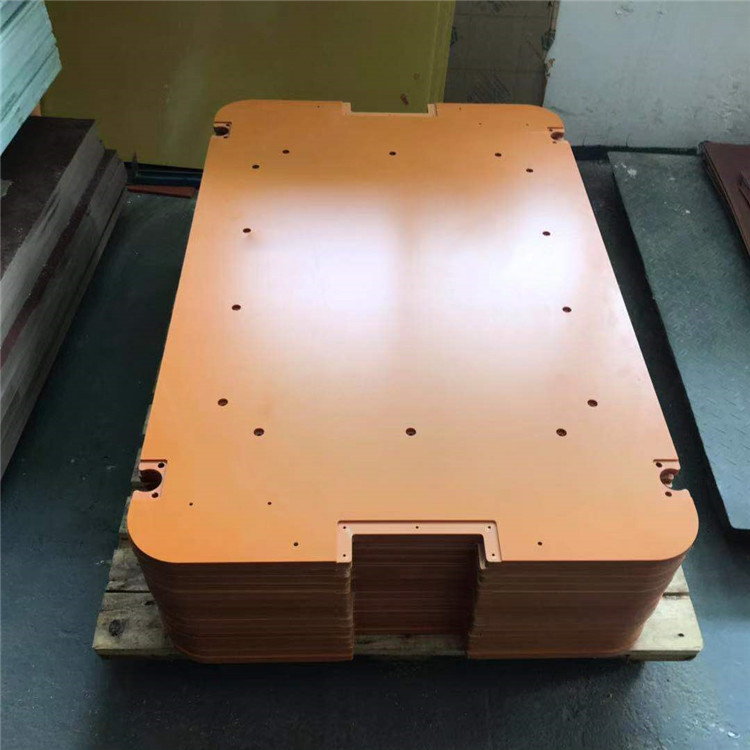
Bakelite sheets machine cleanly with standard tooling and are suitable for punching and stamping, reducing fabrication time and tool wear compared to harder ceramic or glass-reinforced composites. This superior machinability enables rapid prototyping and cost-effective customization to meet specific panel design requirements.
Limitations and Appropriate Applications
While bakelite excels in many electrical panel applications, it is important to recognize performance boundaries. For extreme high-voltage applications, harsh chemical environments, or continuous exposure to temperatures exceeding 120°C, advanced materials like epoxy-glass laminates (FR4/G10) or specialized mica sheets may be more appropriate. However, for the vast majority of industrial electrical panel applications operating within standard environmental and electrical parameters, bakelite provides proven, reliable performance.
Quality Assurance and Compliance
Material certification and manufacturing quality directly impact the safety performance of electrical insulation systems. Shenzhen Xiongyihua Plastic Insulation Ltd. maintains comprehensive quality management through ISO9001 certification and provides materials certified by SGS for industrial use. All products comply with RoHS environmental standards, ensuring that electrical panel components meet international safety and environmental regulations.
The company’s adherence to IEC 60893 standards for phenolic laminates guarantees consistent dielectric properties and physical dimensions, eliminating the risk of non-compliance in export-oriented equipment manufacturing. This certification framework provides procurement managers and design engineers with confidence in material performance and regulatory compliance.
Material Selection Considerations
Optimizing electrical panel safety through material selection requires systematic evaluation of several factors:
Voltage Class Requirements
For low-to-medium voltage switchgear and control panels, phenolic laminates provide adequate insulation performance at optimal cost. Higher voltage classes may require upgraded materials with enhanced arc resistance and tracking resistance properties.
Environmental Conditions
Operating environments with high humidity, chemical exposure, or extreme temperatures may necessitate glass-reinforced composites rather than paper-based phenolics. However, phenolic cotton cloth laminates offer improved moisture resistance compared to paper-based variants while maintaining cost advantages.
Mechanical Stress Profiles
Applications involving high impact loads, sustained vibration, or tight dimensional tolerances benefit from the superior impact resistance and oil resistance of cotton cloth phenolic laminates, which outperform brittle paper-based alternatives in demanding mechanical environments.
Industry Recognition and Market Position
The continued widespread adoption of bakelite sheets in electrical panel manufacturing reflects both proven performance and industry confidence. With production capacity exceeding 1000 tons per month and a global customer base spanning Asia, Europe, Australia, and the Americas, Shenzhen Xiongyihua Plastic Insulation Ltd. has established itself as a reliable supplier of phenolic laminates for electrical safety applications.
The company’s comprehensive "material + processing" solution addresses the complete value chain from raw material supply through precision CNC machining, drilling, and tapping to deliver finished components ready for assembly. This integrated approach reduces supply chain complexity and ensures consistent quality from material specification through final fabrication.
Conclusion: Proven Safety Through Material Science
For electrical panel system designers and manufacturers seeking to optimize safety performance while managing costs, bakelite sheets represent a validated solution backed by decades of successful application across diverse industries. The material’s combination of reliable electrical insulation, thermal stability, mechanical rigidity, and cost-effectiveness addresses the core requirements of electrical panel safety systems.
When sourced from certified manufacturers maintaining rigorous quality standards and processed with precision fabrication capabilities, bakelite laminates deliver measurable safety improvements and operational reliability. As electrical systems continue to evolve in complexity and performance demands, the fundamental insulation properties that have made bakelite an industry standard remain as relevant today as when the material first revolutionized electrical safety over a century ago.
For applications requiring proven insulation performance, dimensional stability, and economic efficiency, phenolic laminates continue to serve as the foundation of electrical panel safety systems worldwide.
https://www.xyhplastic.com
Shenzhen XiongYiHua Plastic Insulation LTD. -
AuthorPosts

- You must be logged in to reply to this topic.